
The Digital Classroom Resource
English and Immersion French

Enable students and teachers to search for, access and share electronically the often-ignored history of diverse cultural communities from across Canada.
Digital Collection features
- Concise stand alone-sections.
- Links to articles easily shared via URL.
- Searchable by subject tags.
- Filters & drop-down options allow for easy browsing.
- Highly visual, using photos, art, live video links & illustrations.
- First-hand accounts, and reproductions of historical documents.
- Plus digital editions of all 10 books always available for in-depth reading.
- Digital access to 3 teacher resource guides.
The digital platform is available as parallel English
and French language sites.
Curriculum Connections
Righting Canada’s Wrongs Course Use Examples
Following Confederation: Canadian Expansions – 7.2.5
Evaluate the impact of Confederation and of subsequent immigration on Canada and reflect upon the following questions and issues:
7.2.5 Sample question: “How did Asian immigrants contribute to the development of Canada (i.e., Chinese railway workers)?
Step 1: Type “Chinese Immigrants” into the search menu. Select the section of interest.
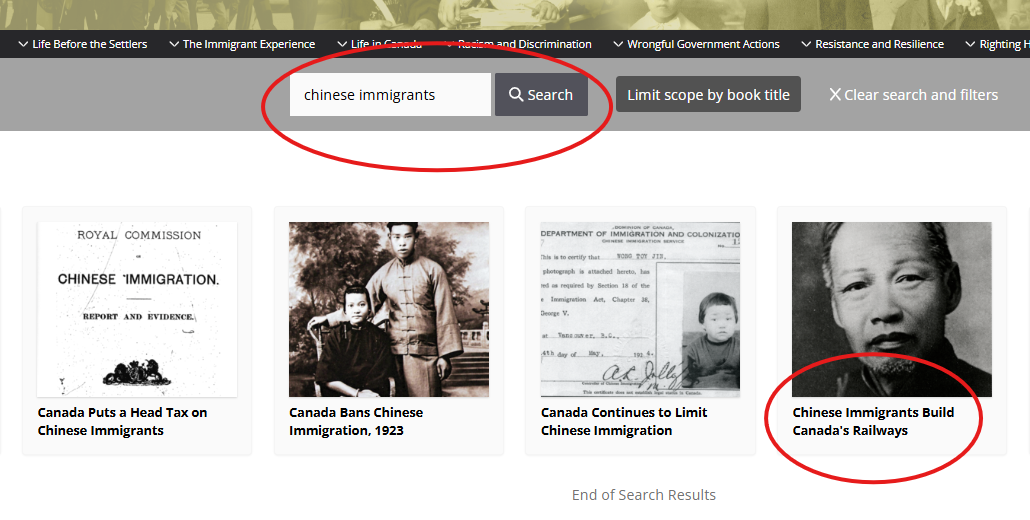
Step 2: Review your results & select your resource.
1750 – 1919
Discriminatory policies and injustices in Canada and the world, such as the Head Tax, the Komagata Maru incident, residential schools.
Step 1: Type the desired topic into the search field. Examples: “Head Tax”, “Komagata Maru”, “residential schools” or “internment”.
Press “Search”, or choose one of the pop-up search suggestions.
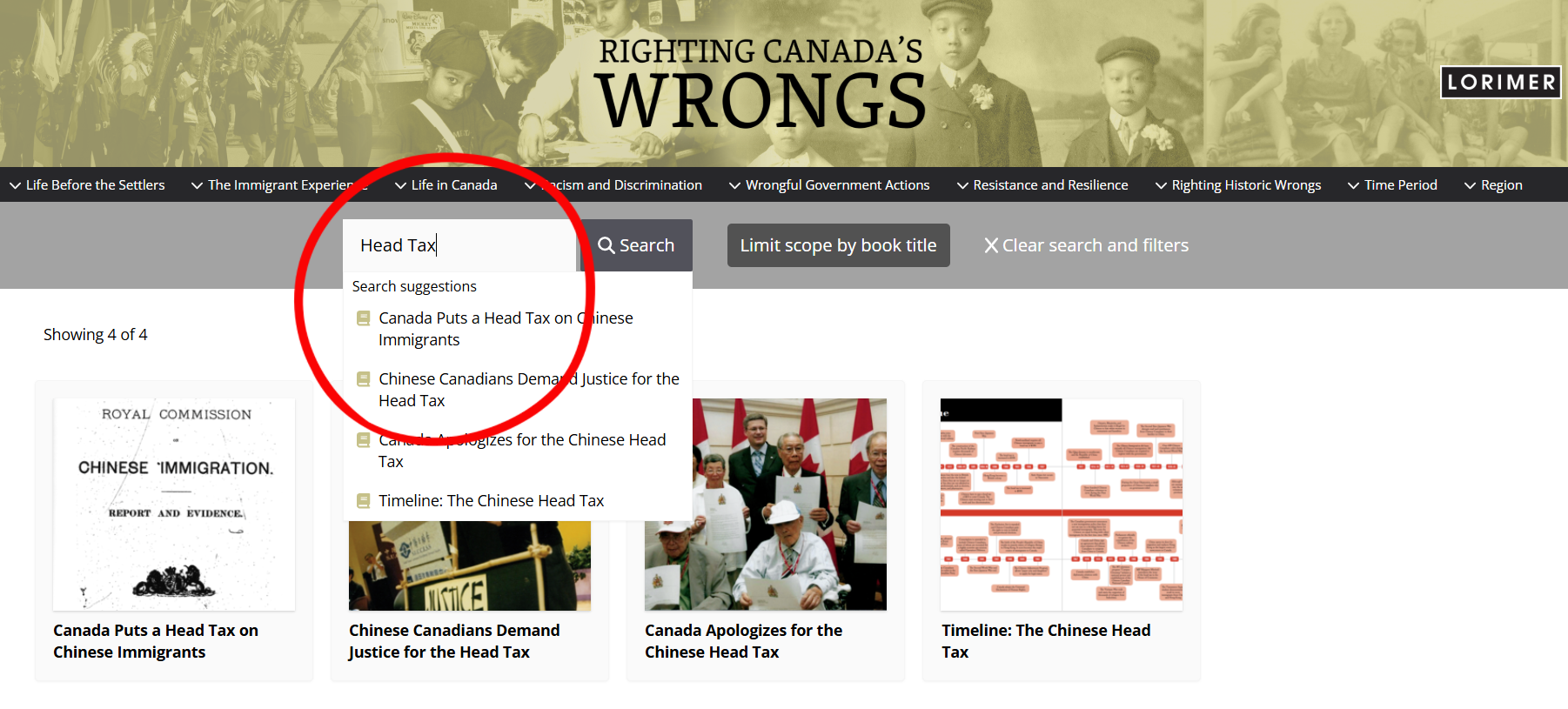
Step 2: Review your results & select your resource.
Canada and the World: 1914 to the Present
Residential schools and other discriminatory policies and injustices against First Peoples in BC and Canada.
Step 1: Select drop down menu item “Racism and Discrimination” then select drop down option, “First Nations, Inuit and Metis” and select the sections of interest.
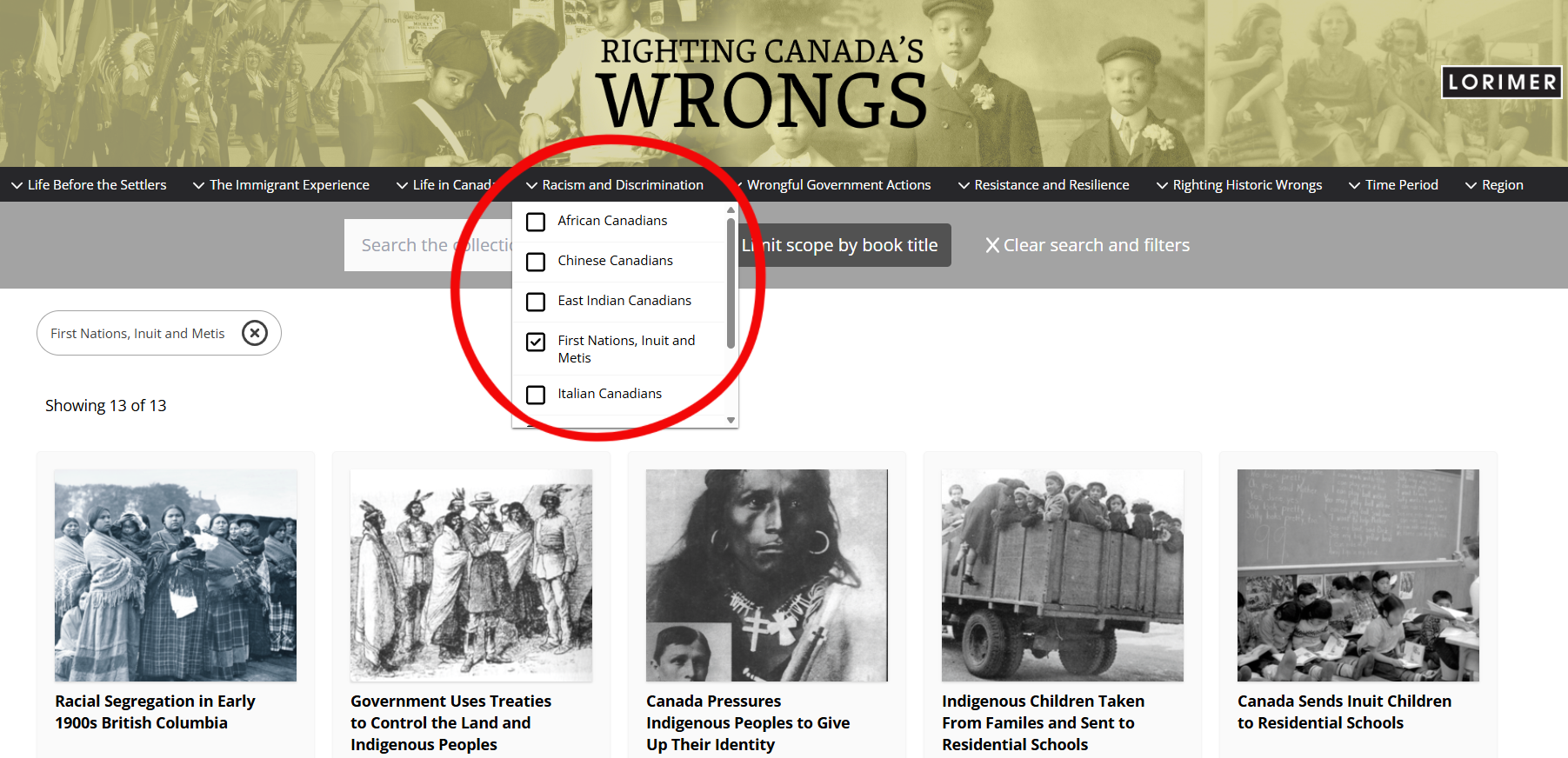
Step 2: Review your results & select your resource.
Identity, Culture and Community
KI-007: Describe the impact of discriminatory attitudes and practices on quality of life. Include: racism, prejudice, stereotyping.
Step 1: Select drop down menu item “Racism and Discrimination” then select drop down options, select the section of interest.
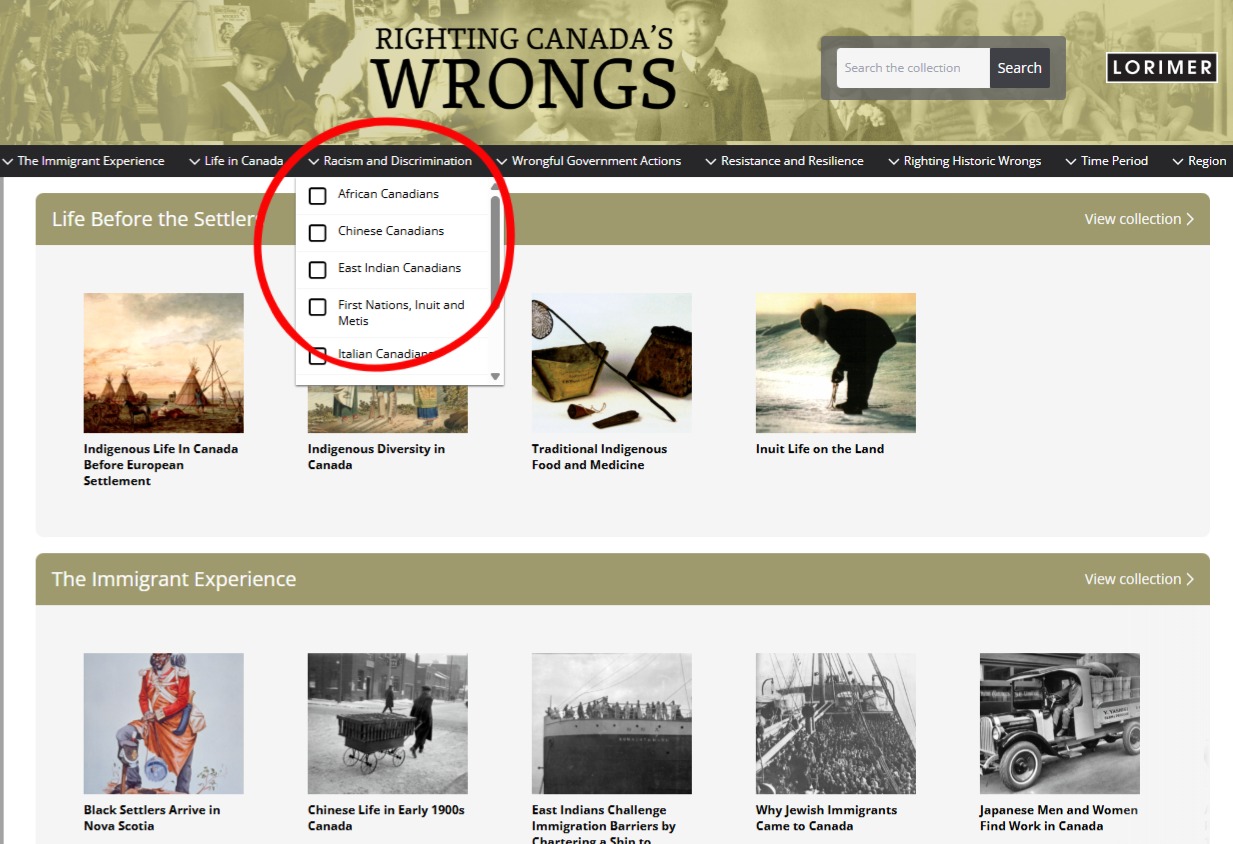
Step 2: Review your results & select your resource.
Historical Connections
KI-018: Evaluate effects of assimilative policies on cultural and linguistic groups in Canada. Include: Aboriginal residential schools.
Step 1: Type “Residential Schools” into the search field. Select “Search”, or choose one of the pop-up search suggestions.
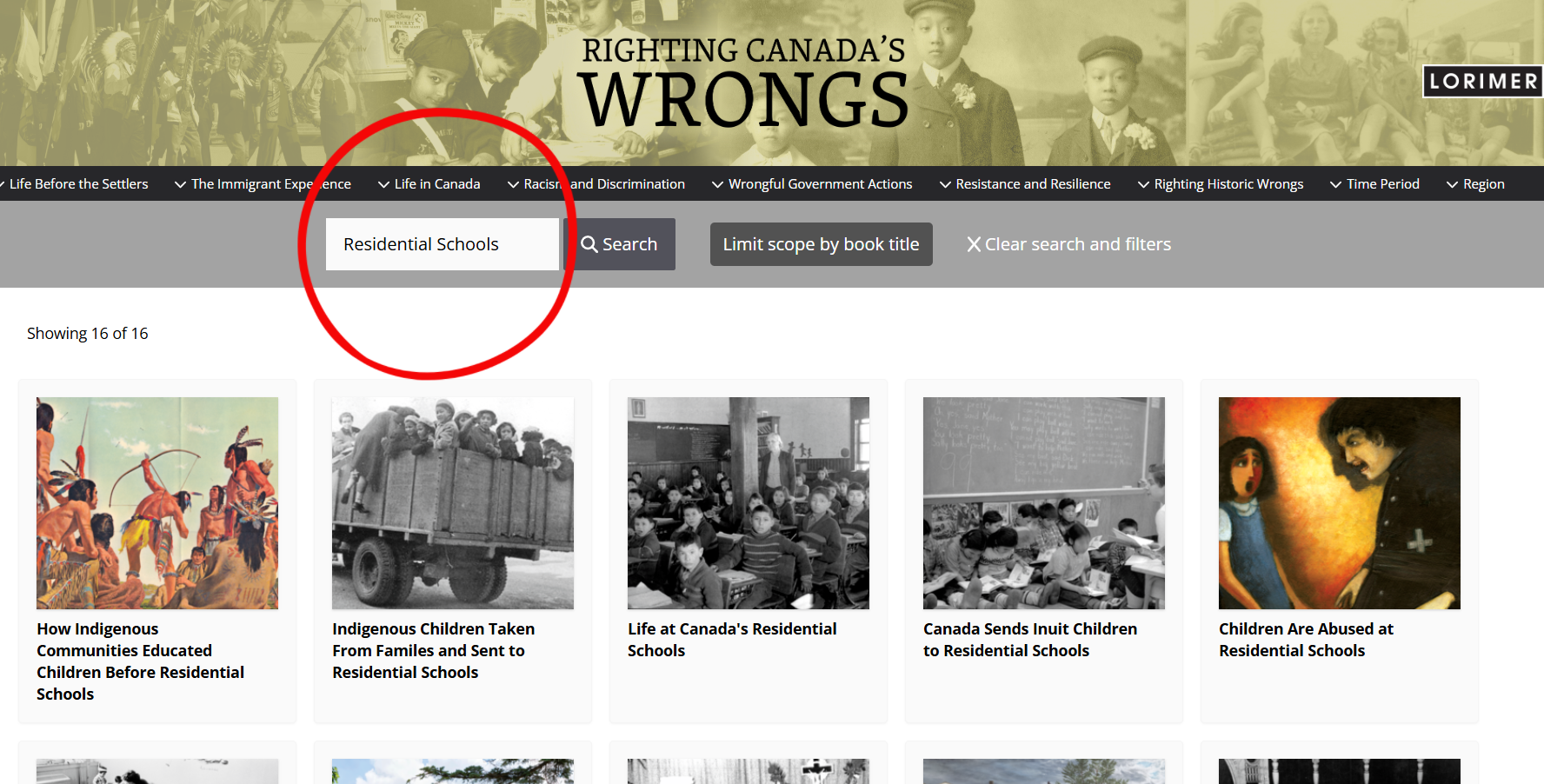
Step 2: Review your results & select your resource.
Historical Connections
KI-030: Describe social and cultural injustices in Canada’s past. Examples: wartime internments of ethnic groups as enemy aliens, Jewish immigration restrictions during World War II.
Step 1: Select drop down menu item “Wrongful Government Actions” then select drop down options, “restricting immigration”, “Internment and Imprisonment” and review the sections of interest.
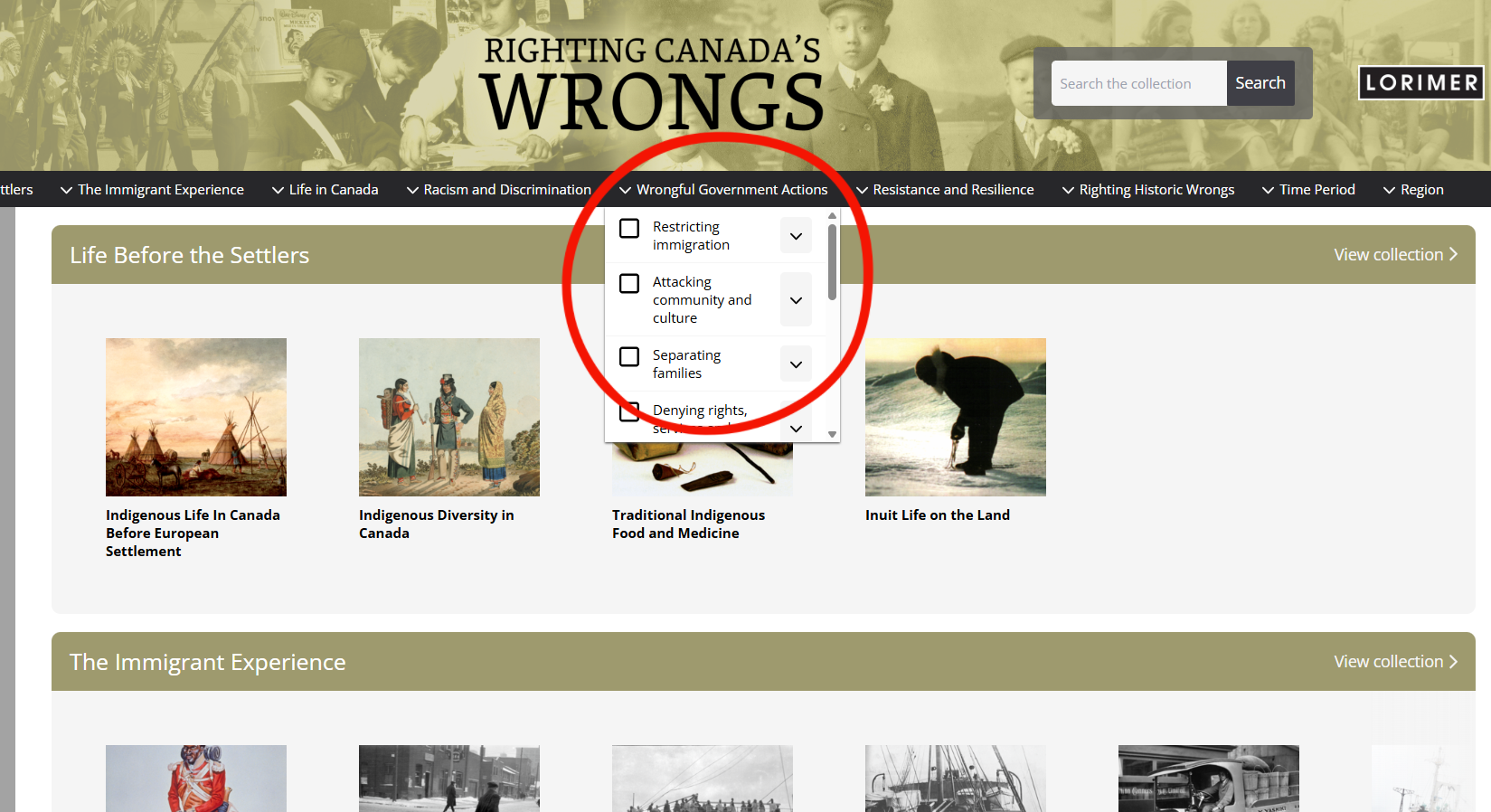
Step 2: Review your results & select your resource.
Canadian Identities
Topic: Indian Residential and Day schools.
Step 1: Type “Residential School” into the search field. Select “Search”, or choose one of the pop-up search suggestions.
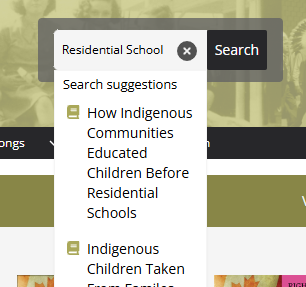
Step 2: Review your results & select your resource.
SCO 7.0 – The student will be expected to demonstrate an understanding of how the Second World War influenced Canadian identities.
The refusal to admit Jewish immigrants during the 1930s by both the Canadian and Newfoundland governments; and the Canadian government’s internment of enemy aliens (Japanese, German, etc.).
Step 1: Type “Internment” into the search field. Select “Search”, or choose one of the pop-up search suggestions.
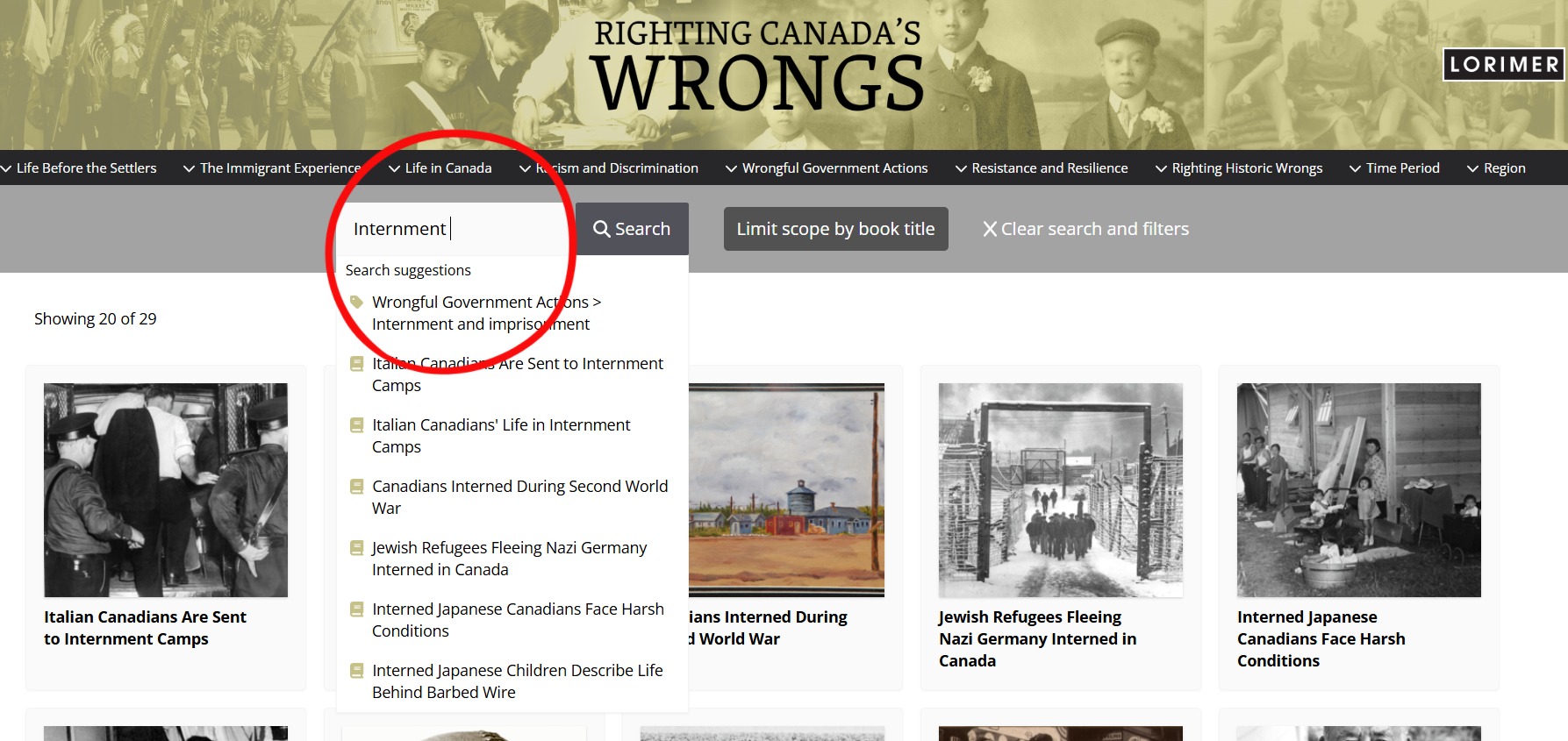
Step 2: Review your results & select your resource.
Learners will reflect on the 20th and 21st century Indigenous experiences in Canada
Reflect on the impacts of residential schools on Indigenous peoples of Canada (CZ, COM, CT).
Step 1: Type “Residential Schools” into the search field. Select “Search”, or choose one of the pop-up search suggestions.
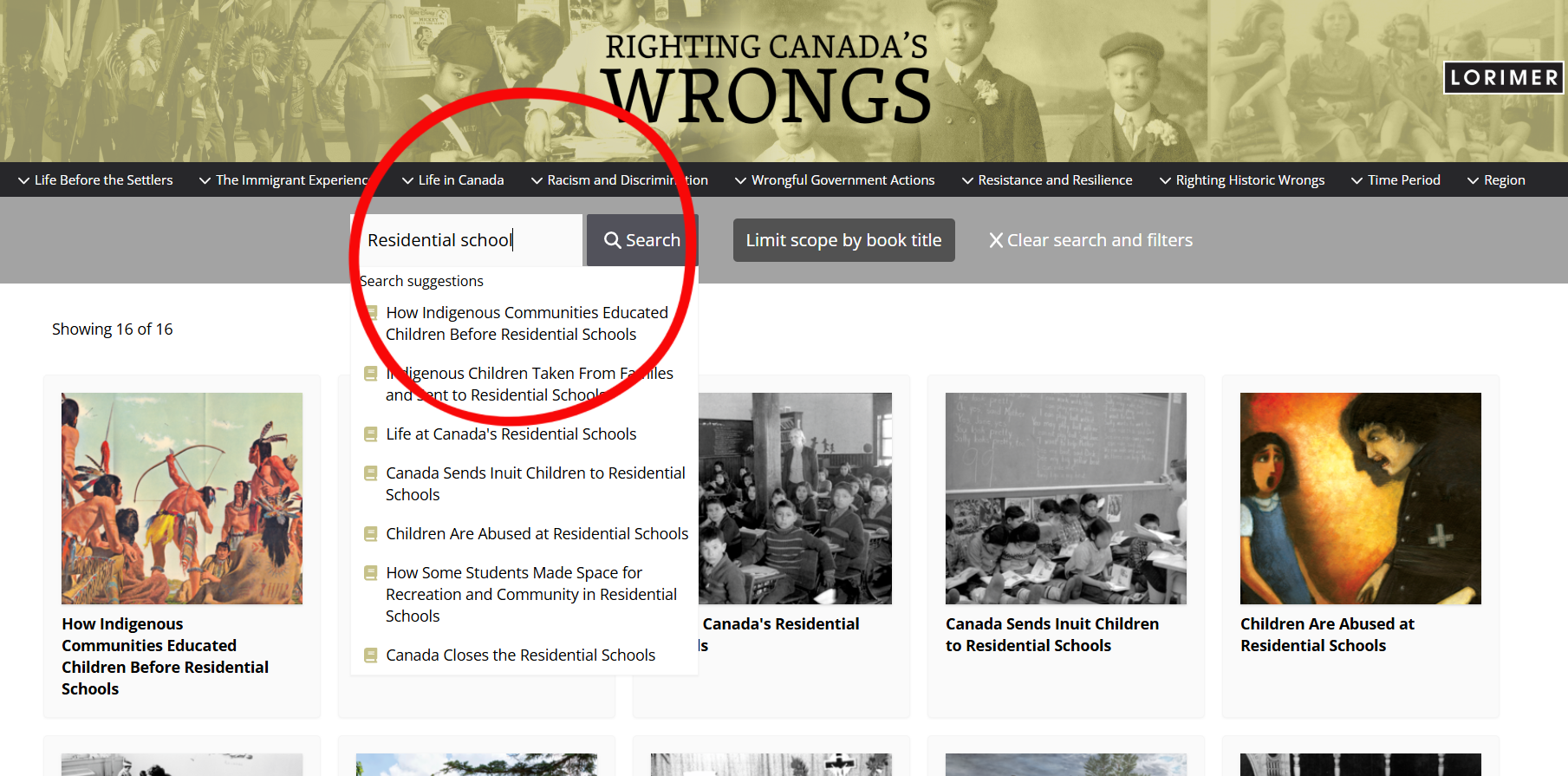
Step 2: Review your results & select your resource.
Learners will evaluate the impact of World War II on a changing Canadian society.
What were the circumstances surrounding the MS St. Louis (1939)? How did the Jewish community and its supporters resist the internment of Jewish refugees during the war?
Step 1: Type “MS St. Louis” into the search field. Select “Search”, or choose one of the pop-up search suggestions.
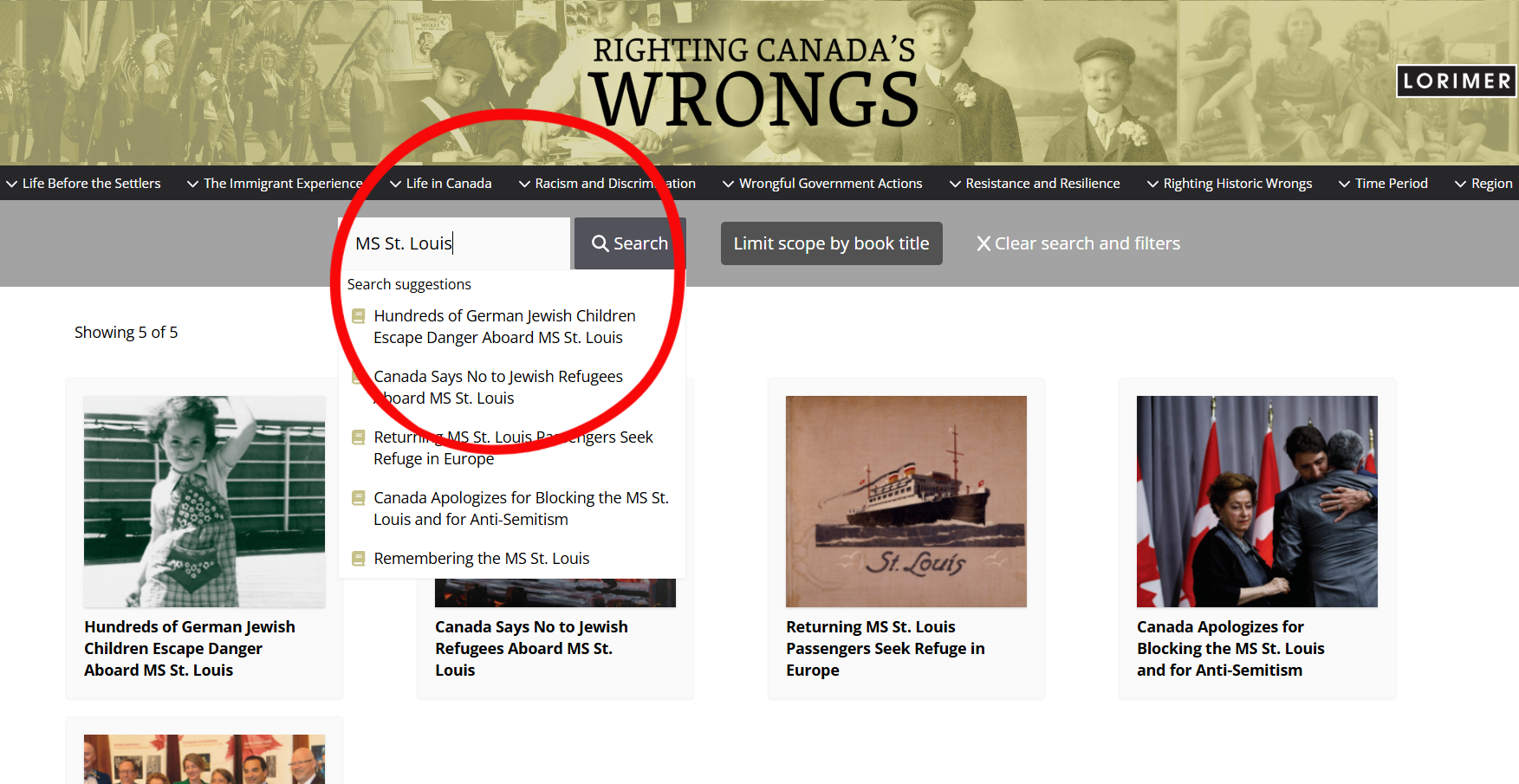
Step 2: Review your results & select your resource.
Residential Schools
Strand B expectation: B2.5 “Describe how the residential school system and other government policies and legislation, as well as the attitudes that underpinned them, affected First Nations, Métis, and Inuit individuals and communities during this period.”
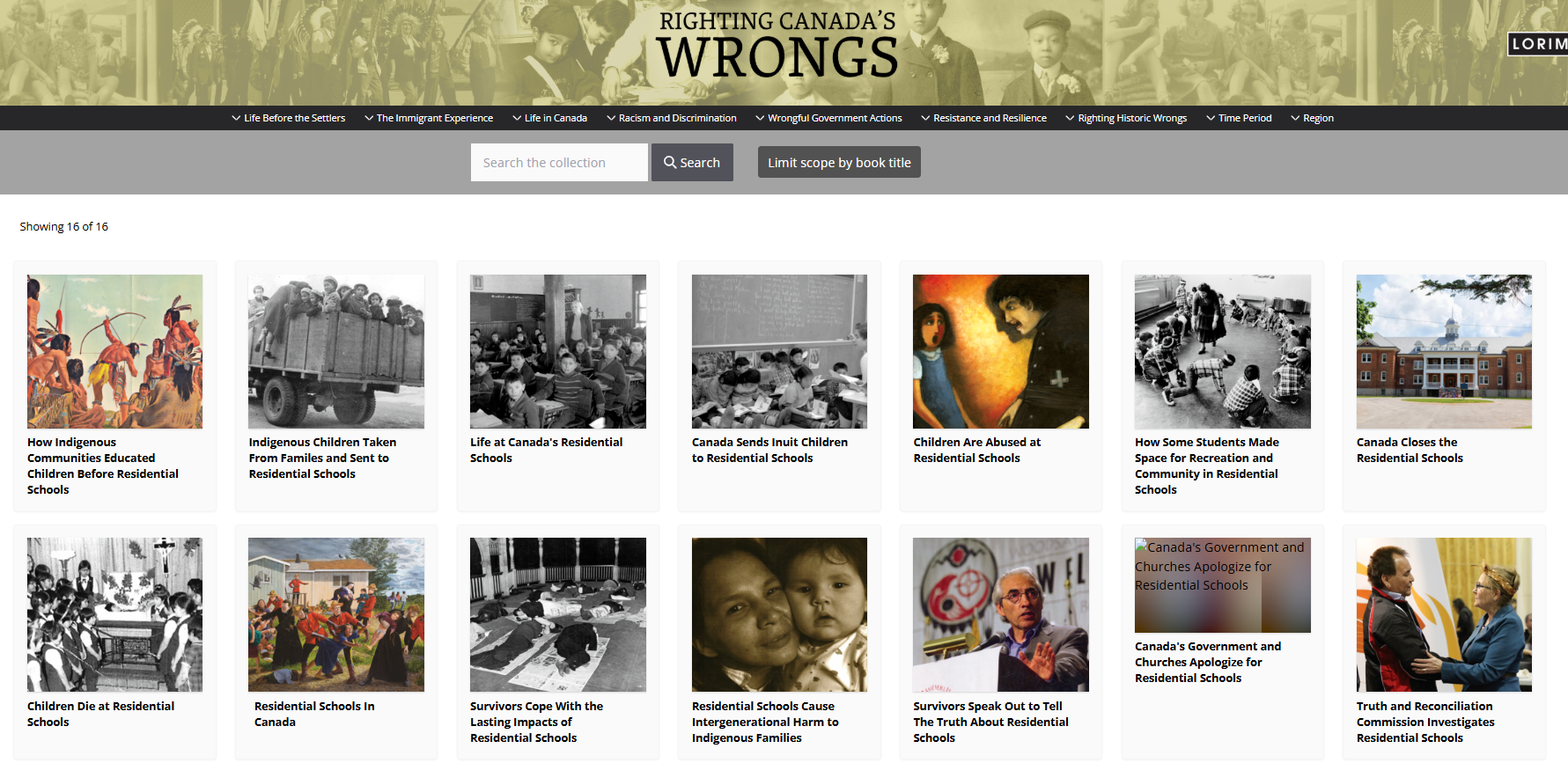
Step 1: Type “Residential School” into the search field. Select “Search”, or choose one of the pop-up search suggestions.
Step 2: Review your results & select your resources. Fourteen sections, each providing relevant content. Each section focuses on a different facet of the history of residential schools in Canada, including documenting their origin, the impacts on survivors, families and communities, and the impacts acknowledged in government and church apologies.
Antisemitism
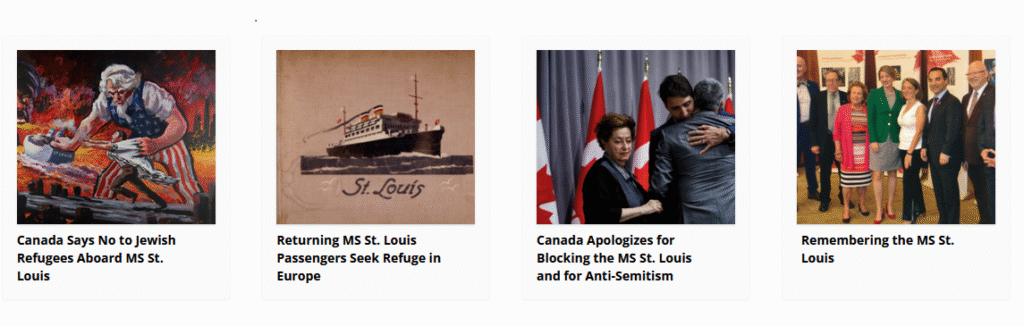
Strand C3.2 Sample question: “Why did the Canadian government refuse to allow the MS St. Louis entry into Canada? How did Canadians view this decision at the time? Why? How do Canadians view it now?”
Step 1: Type “louis” into the search field. Select “Search”, or choose one of the pop-up search suggestions.
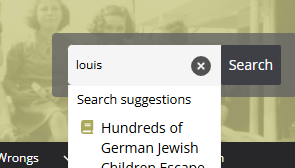
Step 2: Review your results & select your resources. Four sections, detailing the origins of the MS St Louis, the Canadian public reaction and the role of antisemitism in public life, the government’s decision, and the eventual apologies and current historic view of the event.
Civic Action and Activism
Curriculum Topic: B1.4 “Explain why it is important for people to engage in civic action, and identify various reasons why individuals and groups have engaged, and continue to engage, in such action, using both historical and current examples.”
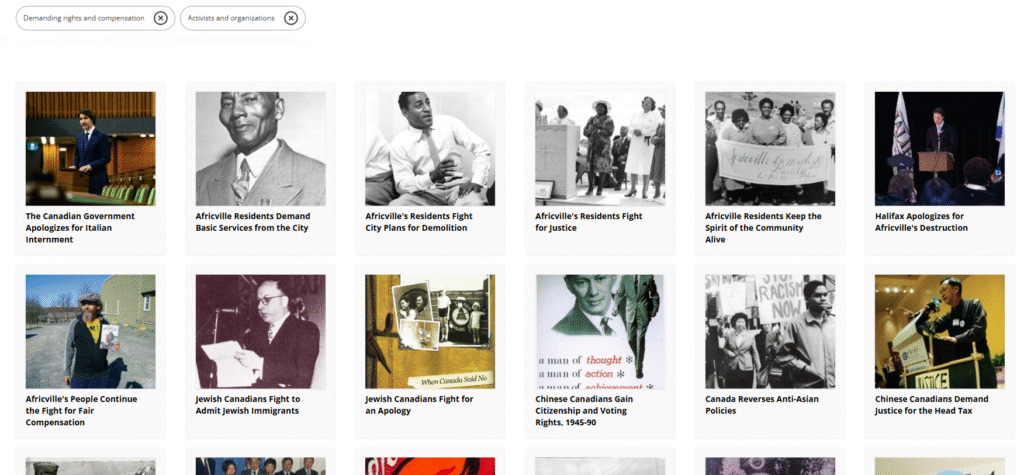
Step 1: Select drop down menu item “Resistance and Resilience” then select drop down options, “Demanding Rights and Compensation”, and “Activists and organizations” .
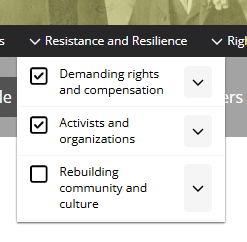
Step 2: Review your results & select your resources. Twenty articles featuring individuals and groups who engaged in civic action as the result of a wrongful government action.
Immigration and Internment
Strand Expectation E2.1 Sample question: “What is the significance of government apologies for the Chinese Head Tax or the internment of ‘enemy aliens’?”
Step 1: Select drop down menu item “Righting Historic Wrongs” then select drop down option, “Government Apologies” and select the apologies of interest.
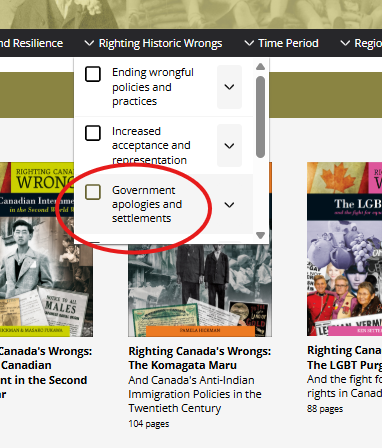
Step 2: Review your results & select your resources. One section on the government apology for the Chinese Head tax, and three more sections for the internment of Japanese, Italian, and Jewish Canadians during World War II. Each section explicitly deals with the government apologies for their internment of these groups, with many additional resources portraying the events that led to the apologies.

SCO4 Demonstrate an understanding of the inequalities of power and authority in an evolving Canadian society.
Students will explore significant government policies in Canada that directly impacted Indigenous peoples, such as the Indian Act, residential schools, and the 60’s Scoop.
Step 1: Type “Sixties scoop” into the search field. Select “Search”, or choose one of the pop-up search suggestions.
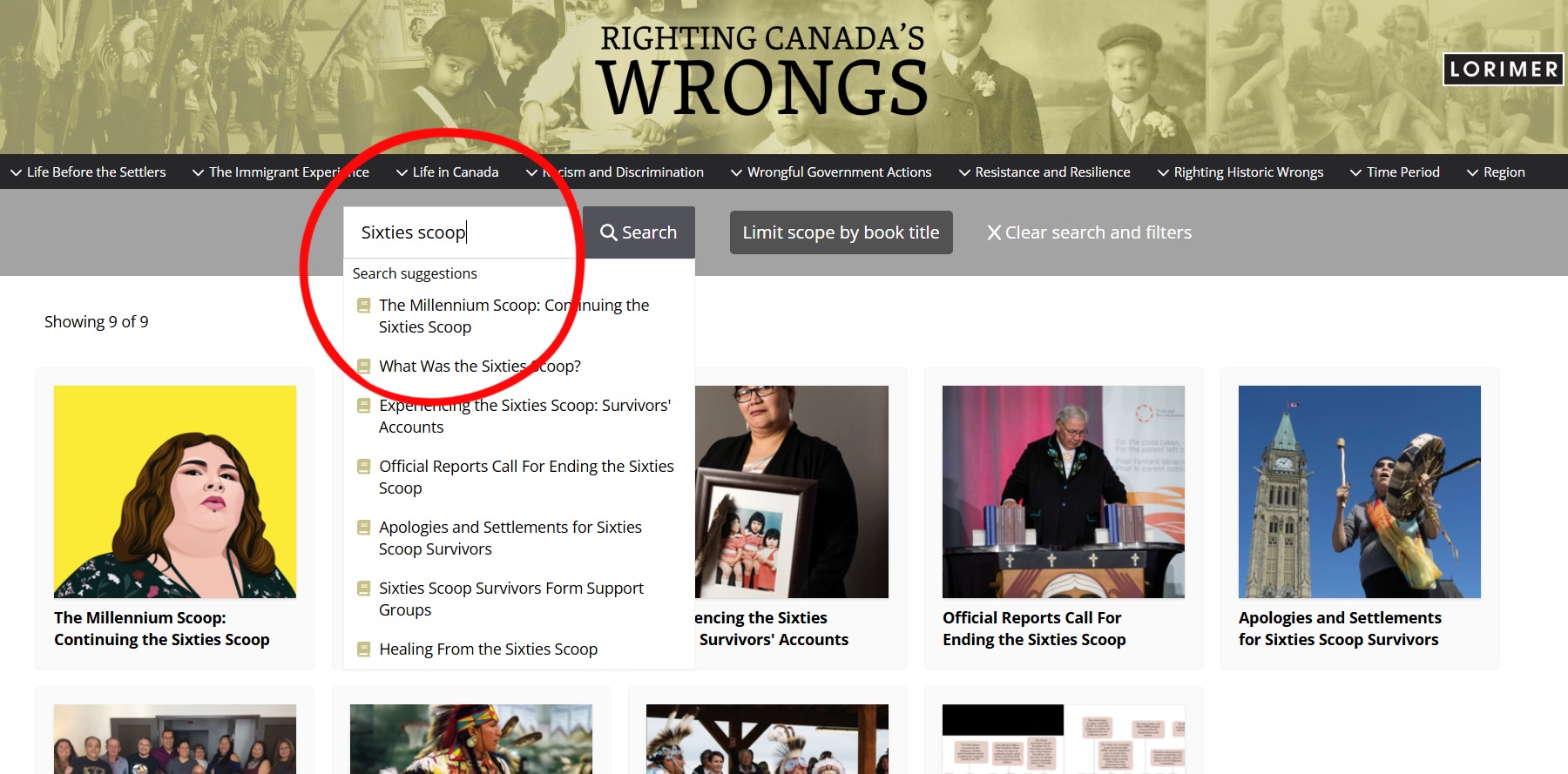
Step 2: Review your results & select your resources.
PA8.1 Contemplate the implications of Canadian citizenship on the life of Canadians.
c. Investigate the effects of the Canadian Charter of Rights and Freedoms on individuals and groups (e.g., same sex marriage).
Step 1: Type “Marriage equality” into the search field. Select “Search”, or choose one of the pop-up search suggestions.
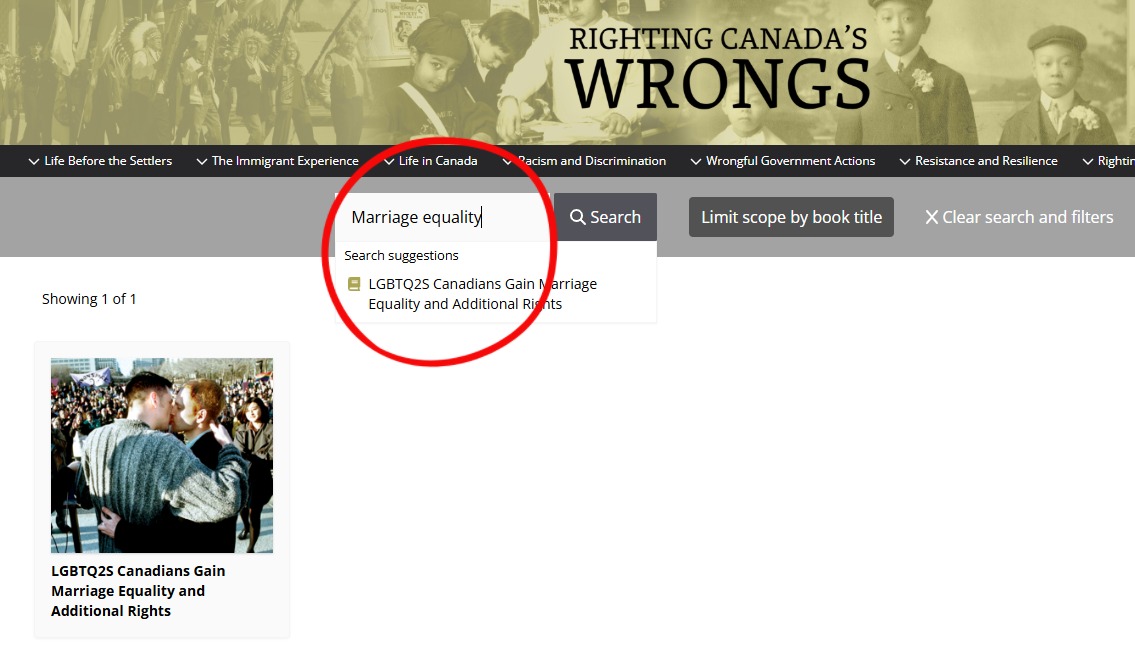
Step 2: Review your results & select your resource.
DR8.3 Assess how historical events in Canada have affected the present Canadian identity.
e. Compare the perspectives taken in cases of injustice in Canadian history: (e.g., restrictions on immigration of Jews during World War II).
Step 1: Select drop down menu item “Wrongful Government Actions” then select drop down options, “Restricting immigration”. Select the section of interest.
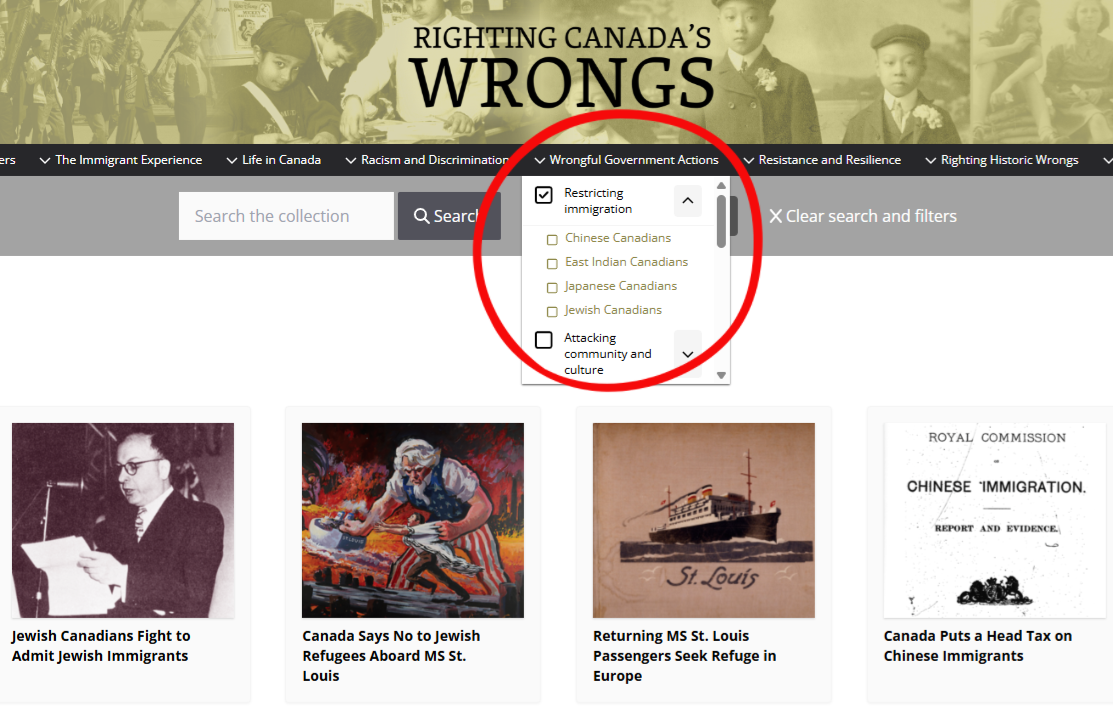
Step 2: Review your results & select your resource.
Canadian Society and Québec Society between 1820 and 1900s
Events that influenced changes: Canadian Confederation, unionization, immigration, railway
development.
Step 1: Type the desired topic into the search field. Example: “Immigration”. Select “Search”, or choose one of the pop-up search suggestions.
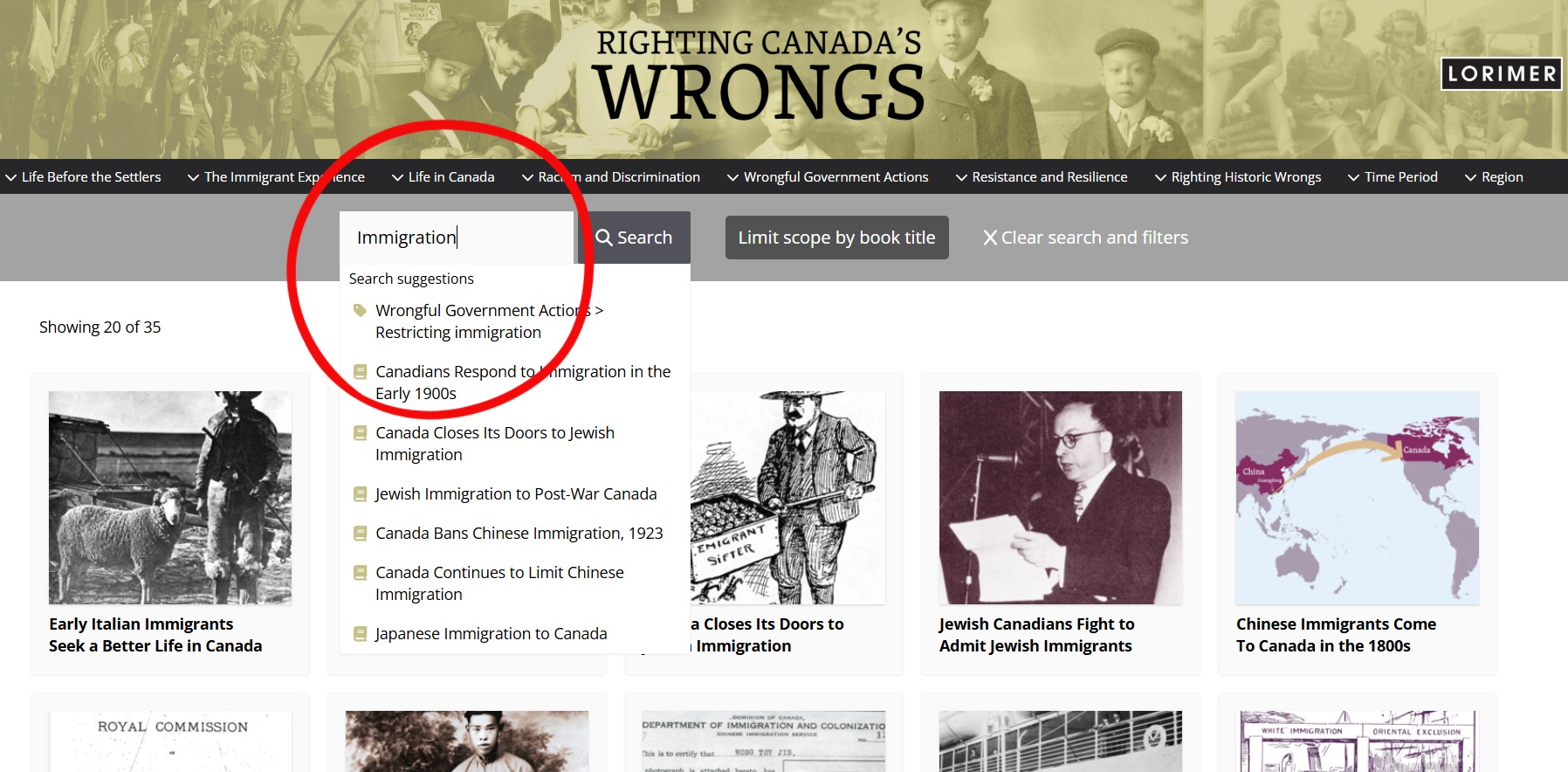
Step 2: Review your results & select your resource.
Characterizes a period in the history of Québec and Canada and Interprets a social phenomenon.
The experience of the Indigenous peoples and the colonization attempts – assimilation.
Step 1: Select the drop down menu item “Racism and Discrimination”, select the “First Nations, Inuit and Metis” subject to view results.
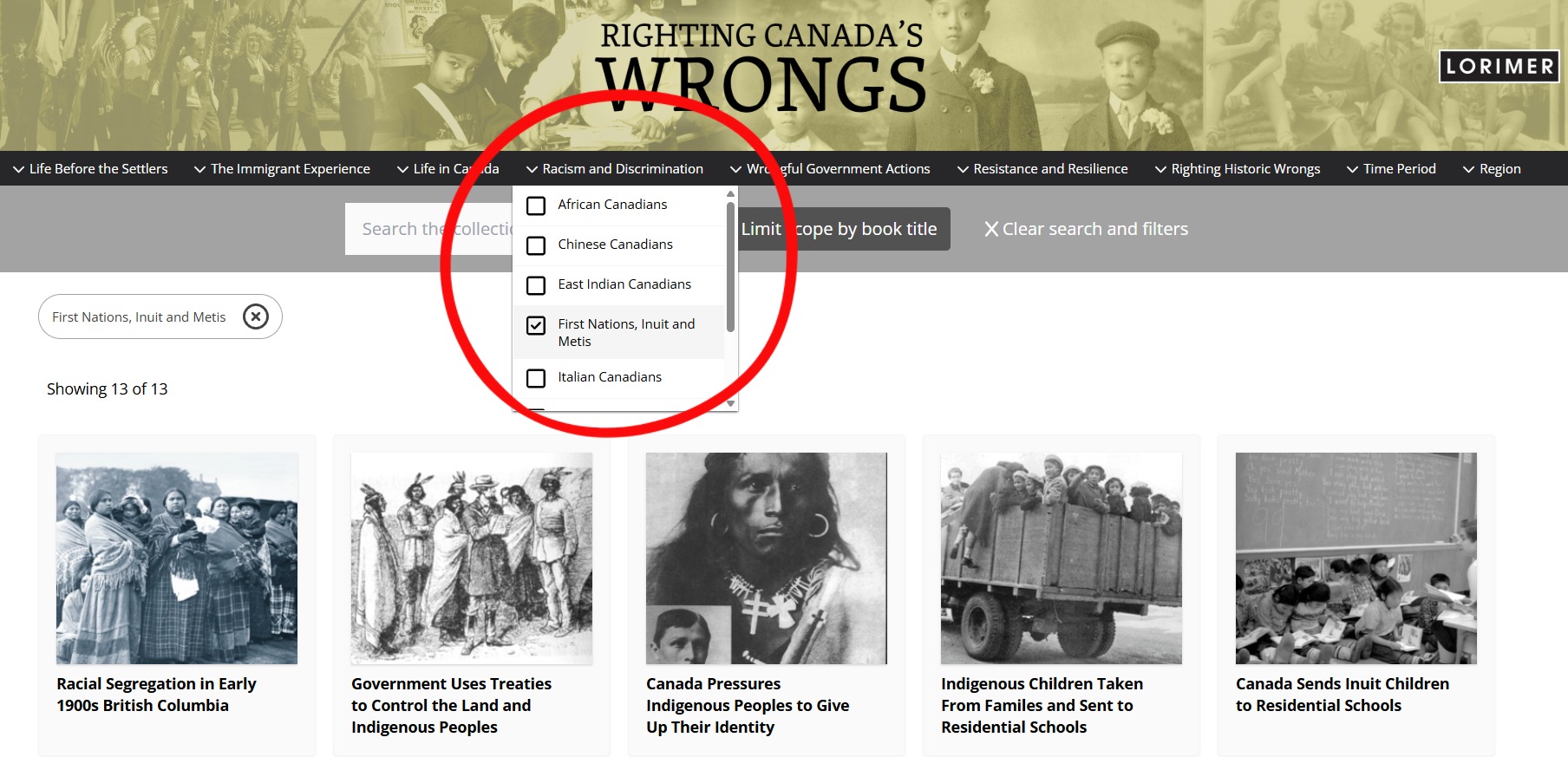
Step 2: Review your results & select your resource.
| Digital Learning Resource – English Digital Learning Resource – Immersion French More Information Digital sales contact: davidglover@lorimer.ca |